Showing posts with label Comedy. Show all posts

Friday, 9 April 2021

Improv with Me is Like… (Sex vs Improv)

There is a fun improv game called “Sex with Me” which explores the extended connections between the act of procreation with a subject the audience deems worthy of comparison. Who am I kidding? It’s a set of sex jokes, puns and innuendo. As I said, it’s great fun. 

“Sex with me is like a writing a blog post: You think about it a lot more than you spend actually doing it.”
Mordsaga show 26/10/2018
Photo by Robin Straaijer

The game allows me a great introduction to a topic I have thought about since I first started improvising: the connections between sex and improv. (Actually, improv has many of the same similarities with any team sport, but sex is funnier than every sport except curling.)

“Sex with me is like an analogy: two things that seem different come together and are revealed to be more similar than at first thought.”

Apart from the obvious starting with “yes” and the fact they have a similarly addictive quality, there are many ways improv is like sex.

Take the whole shortform / longform argument. Some improvisers prefer the quick payoff of shortform, where it is concluded within a few minutes and there’s hopefully a great payoff at the end, lights out. But others prefer longform. This allows for a longer build-up and a much deeper connection with what’s going on. There is still a payoff, but it’s much more about getting there rather than the moment itself. With shortform, once it’s over, there is sometimes a short rest and then you’re off again, but with longform, once it’s done, that might be it for a week. (Note: performing schedules vary person to person.)

The most common configuration of performers is two people, but scenes of more than two also happen. It becomes trickier when there are more people. Giving focus becomes more important as is gauging when to enter and when to withdraw.

There are also plenty of tools and methods we can use to make our scenes better, if we want. Status – one player taking a more dominant or subservient role; the choices of being more physical or more emotional. Many people embrace playing a character other than yourself. And sometimes it is acceptable to use a gag.

Of course, it’s all about heightening. Start small and build. Build to a peak and end here or soon after.

Something we should consider is the audience. Because improv is something people watch too. So now, I guess the analogy has temporarily moved into comparing improv to porn. In general audiences prefer shortform improv. That’s not to say there is not an audience for longform, but it’s largely other performers.

Joking aside, I think the biggest way improv and sex are very similar are in attitudes to how we play. Sure, if you go into the scene intending that you yourself have fun, it can be a good scene. But when it really works best when you go in with the intention of pleasing your scene partner and they go into it with the intention of pleasing you. That’s when you can make truly amazing scenes.

“Sex with me is like an improv blog: it’s an oddly proud feeling when it’s out there for everyone to see.”


P.S. I realise that all this analogising, I am left with one further inescapable conclusion, that solo improv, something I love doing and like to think I’m pretty good at, is basically wanking.

---
What similarities have I missed?

Friday, 25 May 2018

Walk On By: The Subtle Art of Walking On and Walking Off Again

This topic came up as a recent discussion on everyone's favourite data-mining site, facebook. It set my brain off so here's some of its thoughts on the subject.

Before I start properly, I will state that my brain can't decide whether it likes "walk-on" or "walk on." (It already objected to “walkon.”) I'm going for the former as this seems more widely accepted and is clearer in some circumstances. If I offend any grammarians, then I'm am sorry.

I'll start this piece by defining what I mean by the term "walk-on." A walk-on is where an actor goes on stage during a scene and interacts with the scene (usually in a way that adds something) and then leaves. This can either be as a character who enters the scene or as a "director" pointing something out (scene painting, explaining, etc).

"Waiter, there's an extra person in my scene!"
It seems simple enough but it's fraught with danger and it can easily become something else. For example, if the actor doesn't leave, it is not a walk-on, they are adding a character. If they walk on and somehow take too much focus from an already established story that didn't require it, this is stealing focus. Walking on to edit a scene I do not consider a walk-on as we are discussing here, it is it's own separate thing.

There is also a walk-through, which is slightly different, but in the same ball park. It's where, for example a couple of characters cross the stage not interacting with the scene itself, although possibly referencing it. Once they actors have crossed the stage, that bit is over. It's like an INSERT in a movie.


Walk-on: Or a short flashback on Family Guy!
Again if the actors start a walk-through, but stay on stage, it becomes a split screen.
Walk-on: Oh, the jargon!
99% of the time in a walk-on, the actor physically enters the stage (usually by walking, but not exclusively), but, a voice from off-stage adding some details is also technically a walk-on.
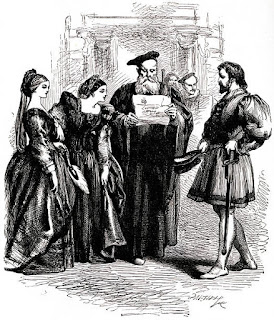
"Sire, I bring you good news from off stage."
There are several reasons why walk-ons can be a good thing. They mostly come from the fact that actors on the side can have a better overview of the scene / story than the actors in the scene. They can usually better see what a scene needs or what the actors want.
Walk-on: So let's hear some.
Some reasons to do a walk-on:
  • Clear up confusions; explain things.
  • Add a helpful detail to enrich the scene, characters, atmosphere, etc.
  • Further a game.
  • Raise the stakes.
  • Highlight an offer that is more important than the actors in the scene realise.
  • Solve a problem which is distracting the players.
  • Helping the story along when it's time to do so.
  • Add some element of fun.
  • To throw in a joke, make a call-back or add a counter-point.
  • Ending a scene. Although this is almost a separate subject, but if you come on and add a line that gives the scene a good end (or "button"), then this is also a specific kind of walk-on.
Again these things can all be done, but should only be done if they are needed. If you are not sure they are needed, they are probably not. Keep watching the scene and see if something feels missing or needed.
Walk-on: You will spend a lot of your time in improv standing on the sides and watching.
Now a lot of people are wary of walk-ons for some good reasons. Here are some of the pitfalls...
  • Sometimes the actor providing the walk-on doesn't leave, either because the actor thinks there is more to add or the other actors took this walk-on as another character - this can especially happen when the actors in the scene feel it is going badly and latch onto anything they can and are horrified that this new character might leave them alone.
  • The offer brought by the walk-on steers the scene unnecessarily in a direction it wasn't going. Walk-ons can nudge a story on track, most notably when the actors on the side can clearly see this is a story about one character's desire for revenge but somehow they characters are getting bogged down making coffee. But sometimes the actor on the side wasn't paying full attention or is obsessed with an earlier offer they think the story should be about.
  • The scene starts to be about the walk-on character when this isn't necessary.
  • The walk-on comes on as a character that the audience loves and this takes the focus. In general, come on for a walk-on as a minor character, do what you have to do and leave, but sometimes, you hit upon a great, funny character and they audience responds well to it. My advice here is still leave. Still serve that scene and help it. Because you can almost always bring that character back later in the show, which will probably have more impact, anyway.
  • The walk-on was to do a joke which ruins the atmosphere or takes away from what's happening on stage. A lot of  judgement is needed as to whether this is the time for a funny walk on. Sometimes the funny gets in the way of the story and although you might have a great gag that you know would get a laugh, if this is a touching moment, it might not be right at all, as you'll stamp all over the story and ruin a chance for improv to be more than just a bunch of joking nods to the audience and call-backs. Sometimes you can save it for the right moment (a touching scene followed by a great, funny line is good comedy) and sometimes you have to let that little birdie go (there will be other jokes, trust me).
  • An actor just wants to be on stage. I think we have all cringed at shows where there is one actor who somehow manages to be in every scene whether they are needed or not. And many of us have cringed when we have realised that actor was us that evening.
Walk-on: Hi everyone!

As with all these things, we can analyse them until we are blue in the face, but they only way to really learn the parameters is to do them. Rehearse with your team, practice walk-ons: do a montage-type longform and say beforehand, “we will do as many walk-ons as possible and then see / feel which ones work.” Play games where, say, only new information can be added by players outside the scene. There are more exercises, I'm sure.

And don't be afraid to evaluate and discuss after. "When you walked on during the egg scene, I didn't understand what you were bringing." Don't be afraid to ask yourself or fellow players, "was that needed?" Understand that it is hard to lean the balance of when to go on and when to not, and we will go too far sometimes in our enthusiasm, but that's how we learn. And sometimes it is a matter of opinion. As long as we are open to questioning ourselves and learning we can find that perfect balance point where we only enter a scene when it truly needs it and then, if this is a walk-on, we get the bejesus back off stage.

Quiz for the keen: There were several walk-ons during this piece. Can you determine which were the helpful ones and which were not? There will be a follow-up post with some examples soon.
Walk-on: As ever feel free to comment.

Saturday, 27 January 2018

IMPRO Amsterdam 2018 - Mardi

Tuesday night began with The Ghost of Love, a format where 4 couples go on 4 very different romantic journeys. For each couple, two “ghosts” control them, mock them, add atmosphere, emotions and plot points. The ghosts leave the actors free to play the characters and situations and not worry too much (or anything) about the story, which is always helpful for an actor.

Ghosts, Actually. (photo by Robin Straaijer)

The resulting show was somehow very cinematic, touching and filled with metaphor and symbolism. The fact that all 4 paths were very different made this feel like a written piece. The paths were not just a new couple getting together, but an established couple getting over a rocky patch and a couple who has always been together who never experienced a bump, but were still a joy to watch. The fourth couple got together, but it didn’t work out, and this, more than anything, made it a well-rounded show. None of this, four neat, happy endings mulch. And seeing the characters in their couples (or not) in the final moments, dampened many a nasolacrimal duct.

L'Action (photo by Robin Straaijer)
From the joy and heartache of love, we moved on to the joy of joy. La Carpe Haute are from Strasbourg in the bit of France everyone thinks is in Germany. They do physical theatre with a ton of mime, clowning and plenty of heart and soul. If there is an object needed, they will not hesitate to demonstrate or be that object - whatever it is to make sure you know what that object is. There is never doubt. And even that object, no matter what it is, exudes joy. They love to play, they clearly love each other and they commit to whatever they discover about 104%.

To cap off the evening, there was a choice between two solo shows:

Las Vegas I Gave You My Heart (Photo by John Mabey)
The Laser Comedy Show by Chris Fair is comic book drawn right in front of you with the addition of sound. You’ll find comic books pretty lame after this.

The alternative was Trudy Carmichael Presents: The Improvised One-Woman Show, in which Robin Rothman plays a Las Vegas legend telling the improvised story of her life and career in between songs.

Lasers or divas, sometimes in life you have to choose between the two.

Tuesday, 31 January 2017

IMPRO Amsterdam 2017: Day 5: Friday

Today’s open stage had 3 musicians and a full room . It’s certainly grown over the week and is definitely something people want. Improvisers, like all junkies, need their fix.


The first half of the main show was Midnight Radio, a format devised together by Emil Struijker Boudier and Sarah Michaelson despite being several thousand miles apart. If you don’t know who these people are, let me get all wikipedia on you. Emil is an Amsterdam-based improviser most known for taking the art of tech-ing improv shows up to 11. He was the main tech of easylaughs before the pirate ship Boom Chicago kidnapped him one night. Sarah is also known as DJ Mama Cutsworth and provided the soundtrack for several shows this festival, most notably with the mostly-Colombian group Picnic, of whom she is the non-Colombian part.


It was a really nicely different show. The premise is that there is a midnight call-in radio show hosted by the above mentioned two (and really, there should be). The rest of the cast call in in character and request a piece of music, which, Spotify-permitting, is played. The music is then played and used to inspire or provide the soundtrack for the scene. And then another caller.

Again this was a vehicle for some great scenes, and some lovely callers. And there was a genuine feel of two DJs who have been together for ages despite having met the previous weekend. But this is a theme of the festival. By Friday, you have a strong cast of players who you would swear all knew each other since Jesus was a young improviser.

Felipe’s puppy stole the show. But there were plenty of other good moments. It started with a super-strong wordless scene with Dave, Roemer and Victoria acting out the classic boyfriend finds girlfriend flirting with another guy and bullies him out of money so that now boyfriend has all the cash, so girlfriend leaves with him. There was an interesting, almost surreal scene of a woman harvesting hearts that lead to what is possibly the call-back of the festival when Marta returned to collect a broken heart in the final scene.


The show was followed by British duo, Folie à Deux. Yes, I know it’s French. After Brexit, they will have to be called “You don’t have to be mad to be in this duo, but it helps,” which is not nearly as catchy.

Charlotte and Andrew are clever, good actors and have a ton of chemistry. There is much wit on display and they take their time to explore the world and the characters, plus find some games to play on the way. Returning to stories always sees them moved on nicely. The doomed romance between a hotelier and the only guest in the One Season Hotel was a particular joy to see unfold.

At this point in my notes, it says “Nele is great.” No one can argue with that which is why I wrote it exactly as she said.

I rounded off the night in the company of Phil Lunn, whose show centres around a female cabaret singer who has been around the block. She tells us about her life (with much help from the audience) and then sings songs inspired by those events with titles from the audience. The songs are great and the life story, from humble beginnings to present day, provides a nice arc.

Sunday, 29 January 2017

IMPRO Amsterdam 2017: Day 4: Quinta-feira

Backstage at festivals the atmosphere is nearly always of excitement. Sometimes towards the end, it’s exhaustion mixed with excitement, but mostly it’s excitement. Every year at IMPRO Amsterdam, the back-stage snacks get more elaborate than the year before. By 2024 there will be meals served by a butler.*

(* - probably not.)


The first show off the night was Cage of Fools which is a hosted show of short games with intermediate chats with the players. It somehow reminded me of the short-lived British TV improv show Fast and Loose.

In between games the host, Rod Ben Zeev, asked them questions about relationships. It was a nice chance to get to know something about the festival cast, or half the cast, although it was the bit that was more hit and miss than the games. By now, the cast is working well together and the show had some great moments. Something different than what normally happens at the festival these days.


After the break, we were treated to Impro Fado, a format by Portuguese group Os Improváveis. Fado is a style of music and the word fado means “fate.” As well as 3 actors they had 2 musicians and a singer. After every scene, the musicians and singer performed a song about what had happened. The show and songs were mostly in English but with some Portuguese. We didn’t mind that. In fact, although the actors weren’t held back too much by their English, they were physical and emotional enough that we could have followed with a lot more Portuguese. The singer sung much better when singing in her mother tongue. I think partly because the Fado style is very much tied to the Portuguese language. She had a phenomenal voice, and we could have happily listened to her sing the Lisbon telephone guide.

The scenes were highly dramatic and the story was closer to tragedy than comedy, but that suits the style of the music. There was some levity, but I always feel refreshed watching a show that is not trying to be funny. And the end of the main character going back to the abusive relationship she ran away from rather than stay with the kindly man who gave her freedom was fitting the genre and, unfortunately, life.


Of the late night show, I saw Ohana performing Sidekicks. Ohana seems to be a sort of improv band camp and the cast or this show were a collection of improvisers from various currently European countries. Their format, Sidekicks, follows two minor characters whilst around them or behind the scenes a bigger story is played out which the just bumble through. It’s very much based on the play Rosencrantz and Guildenstern Are Dead, which follows two minor characters whilst the story of Hamlet goes on around them in the background. The 2 central characters are a basically a comedy double-act comprised of two dumbards who talk about comedic inconsequentials whilst they almost get involved with (but never quite do) the action.


It’s an ambitious plan. The show was a lot of fun and they achieved what they set out to in a broad sense. There were some funny moments and the central duo had some nice games. This is a group that has un together but does not perform a lot together. I love the concept, I do feel it would have been much stronger if the backdrop had not been comic but epic or tragic. But instead it was very often played for laughs which took away from the power of the comedy of the central duo.

I’m looking forward to more high-concept format applications next year. Personally I want to see a show based on the movie Momento that plays scenes in reverse order.

Wednesday, 25 January 2017

IMPRO Amsterdam 2017: Day 1: The Mondayening (part 1)

The performing part of the public festival started off with an open stage, where eager festival attendees can perform with each other and cast members. Unfortunately due to a scheduling conflict no cast members could be there, but 20+ eager improvisers of all levels from all corners of the globe did turn up. I made them play all those classic games you do when you start plus a couple of slightly harder ones which they all did with that spirit of fun that infuses much of improv.

Journey to the centre of the Earth.

You don’t really expect the first day of the festival to knock the ball out of the park, but there were a couple of moments where the ball got send way beyond the edge of the theatre and a metaphorical ballboy had to run off and get it.

The smoker takes it all... Gbgimpro sing "Smoking!" from the unmade musical "Smoking!"
Picnic Impro leave us speechless

In the first half, Each team got to show off what they do, that is what they will do in later shows. Well, kind of. The Swedes sang an amazing, stunningly-accurate high school musical song about smoking; the Dutch team (who actually don’t have their own show, but mix in with others) explored relationships at a typical Dutch celebration; the Portuguese performed a highly dramatic scene and then sang beautifully about it (in a classic Portuguese fado style); the Colombians told the story of 2 wrestlers coming together for a fight with no words, only phenomenal mime, clowning and acrobatics, aided by a sountrack. If I had to pick a highlight this would be it. Every now and again you see a set off skills on stage and you go to yourself, “I so wish I could do that.” This was such a moment for me.

Paul Dome reaches another
high point in his improv career
Team America are Big Bang (from Boston) who take the kinetic impulse and energy from the beginning of the universe and transfer it onto stage. They not only showcased their impressive brand of quick-fire, quick-change, energetic improv, but the also they threw in a rule whereby one of their players (Paul Dome) was not allowed to touch the floor for the entire set. What transpired was a hugely playful workout, not just for the other 2 players but also the audience who had to carry Paul all the way to the back of the room and back (to the front that is). In terms of committing whilst having fun with each other, they are a group hard to beat.

Because only half of the British duo was there, which is (2 multiplied by 1 over 2, carry the 1, round to the nearest decimal…) just 1; and Patti Stiles was there not with a team but with just herself (that's 1 minus 0 divided by 0, no that means there were an infinite number of Pattis); plus the Colombians had brought a Canadian to provide their soundtrack… these appeared together as The Commonwealth, which is the euphemistic title the British have for the collection of countries it obtained to enrich itself.

Patti and Charlotte get in deep.

Charlotte (UK) and Patti (CA/AU) played a scene inspired by music from Sarah Michaelson (aka DJ Mama Cutsworth, CA). This scene about a woman and her grown-up imaginary friend had that kind of genuine depth of exploration of what it is to be human you rarely find in an improv scene. Hell,you don't get it in movies enough. Again the poor ballboy had to run and fetch the ball.

Friday, 2 October 2015

Two Shades of Funny

There are two sorts of funny in improv: Constructive and destructive.

Constructive comedy comes directly from the situations, characters. It comes from within the scene. It emerges from making natural connections with the information we have. It is discovered in following the story and the progression of the characters. Constructive laughs sweep the audience along with the story, make them connect with the characters more and make them understand a little more.

Destructive comedy comes from outside the scene. It comes from the ego of the actor and a desire to be the funny one. It comes from ideas and references that are being forced where they are not wanted. Destructive laughs, make the actors stop and following the story and characters. It makes the whole edifice constructed in the brain of the audience member to start to crumble, and in some cases become destroyed completely. It makes us care less about the characters.

Stand-up can embrace both forms much better than improv, because it is about the laughter. Comedic plays or films almost never have the destructive type unless they are absurdist or “screwball.”

Improv, as ever, falls somewhere between these two mediums. In fact one possible definition for short form and long form could be to which end of the standup-theatre line people are trying for. And of course, short form can take destructive comedy. Whatever you are doing it’ll be over in a couple of minutes, nobody is emotionally invested, so why not gag the hell out of what you (or someone else) started.

But if you are trying to do something longer, and want to bring the audience along with you, you don’t want to be destroying what you’ve set up. Because if you are fine with destroying it, why should the audience care anything about it? They won’t. You don’t care, they don’t care.

Birdsong at the Comedy Theatre, London. Photograph: Tristram Kenton
And believe me, you are not reducing the comedy by not going for the destructive humour, not at all. Comic plays and movies are still funny. Not destroying the scene means you allow yourself the chance to find the constructive comedy. You allow characters to develop that allows you to find deeper comedy traits than simply a catchphrase or silly walk. It allows comic situations develop that are funny because they came about organically rather than just being contrived and forced on a scene. They allow us to find comedy in moments that are not inherently comic and still remain true to the predominant emotions in the scene.

In fact, I deliberately emphasised the destructive term because it really is that. It shuts of so many doors for things that would take a show from being merely funny to being amazing.

Monday, 2 June 2014

Improv vs Comedy

Like a lot of people, I got into improvised comedy because I enjoyed being funny. And like a lot of people over time I came to the realisation that comedy is not at the heart of improv, but the genre it is generally played in. In fact, comedy can often be at odds with improvisation.

A lot of comedy comes from breaking things. There is much comedy in destruction. Many a punchline reveals that things are not what they seemed. That's all very fantastic when it’s the end of a joke, but in a scene it can be hard to recover from. The rug has been pulled out from under the scene and you effectively have to start again. Jokes like these are called "gags" in improv – jokes that halt or destroy the action. They don't always seem so bad in shorter scenes, but they can be lethal if you are trying to get an audience to care about what's going on enough to make it last longer than 5 minutes. It is especially damaging when the gag reveals the situation to be sexual, gross, racist, sexist or other things like this. The laws of improv means you need to go down that path once it has been stated, which might have a very negative impact on the engagement of the actors and audience.

Other destructive forms are outright nos. Saying "no" is funny. Any form of spanner in the works can be very funny. Here's a classic example which nearly always results in a one-dimensional scene:

"You are a highly respected doctor with so much experience."
"It's my first day."

I've seen several groups who somehow manage to block so much for humorous effect, every offer seems to be inverted in the manner of the one above. If that's fine with the rest of the group, it can make for a show with lots of laughs. But I argue that these sort of laughs coming from the laughter response to surprise only work on a very shallow level, become predictable quickly and make it very difficult for the group to create something with any depth.

Laughs that come from connecting two seemingly unconnected things, from the characters themselves or from a great reincorporation are much deeper and much more satisfying.

Concentrating on the funny often leaves the relationships and story untended. People going simply for laughs will much quicker go into areas of sex, bodily functions or having a go at whatever racial group is out of vogue at that time.

Actors who concentrate on the funny are often the least supportive of their fellow players who tend to be the ones running around justifying the crazy stuff the one trying to be funny is saying. The problem, of course, is that the player going for the funny is (often) getting laughs, especially from people new to improv, so this is behaviour easily reinforced.

I don’t want to sound like I'm against funny. I'm not. I describe myself as a comedian and love nothing better than getting a room to laugh. But over the years I have, in improv, been trying to shy away from the selfish, destructive laughs and trusting that if we all work on making the scene awesome, there will be moments of humour that arise. In fact with the right group and experience, they'll arrive almost as much as if you block every offer that comes along and they'll be a hell of a lot more satisfying to everyone.

Are you with me?
(It's okay, you can say a big "NO!!!!!" here, that's actually a good out.)

Saturday, 19 April 2014

Reincorporation example #1: One, Two, Three (1961)

So, been playing with video and sound and decided to make some illustrations of comedy concepts. These are not only useful for improvisers, but for stand-ups and all sorts of writers. Reincororation is not just for comedy, in fact it's a big part of storytelling. If nothing comes back, you don't have a story. Love to know your thoughts.

Friday, 26 April 2013

The Stage-Time / Space-Time Discontinuum

As a semi-professional academic of various performing arts, I have had much time to muse on one phenomenon that all performers have experienced no matter what their discipline:
Time on stage is different to time in the audience.
Two minutes as experienced by the performer can be ten minutes to the audience. Likewise ten minutes as felt on stage can sometimes be two minutes to the audience. Typically the audience time is closer to time as experienced by the clock. It’s very confusing to most new performers and a real skill to be able to accurately estimate how long you’ve been on stage.

It is the clearest example I have encountered of how relativity can be experienced by us.

The performer can be seen as being a moving object and the audience at rest. And performing is somehow equitable to travelling near the speed of light. Obviously, not exactly in physical spaces, but most performances are a journey along a story line, or through a fixed set of games, routines, sketches, songs, poems, ideas or points.

This analogy makes it clear that it is only natural, given Einstein’s assertions, that time experienced on stage is different to time experience off stage.

But it doesn’t fully explain how this experienced time can vary so wildly from performer to performer, from performance to performance and from different points within the whole performance. Obviously it depends a lot on the adrenaline in the performers body and the focus he or she has on it. Adrenaline speeds up the heart rate which has the tendency to make the outside world slow down. It’s the reason when you’re in a car crash or something similar, you often see it happen in slow motion. Focus on something has the opposite effect. Many of us have experienced the same effect off stage, where we’ve been so engrossed in something we haven’t noticed that it’s now the middle of the night hadn’t there been plans for dinner.

So the balance of these two opposing forces cause radical shifts in time-perception as we travel from the start to the end of a show. Had I time and a grant I’d love to measure both throughout a performance and also somehow record the performer’s idea of time. But I have neither. One day I will find the time enough to do some google searching to see if someone has already done it. But not until I get a grant.

I would also love to derive from this a comedy equation, an E=mc² for comedy relativity. Some of you might have noticed that even this equation shows that the energy of the room is that of the MC, squared. [1] Or that it is dependant on the mass of the comedian and the comedy constant c. C, in the old days of BBC radio, used to be known as the “speed of light entertainment.”

Enough silliness. Certainly, I do believe there is an equation that could be found using values for focus and adrenaline to calculate perceived time, but it probably wouldn’t actually help anyone to know it. Experience is definitely the best thing to be able to circumvent this problem. Experience not only allows you to control your focus and adrenaline levels but also allows you to be able to perceive or estimate audience time more accurately.


[1] MC = Master of Ceremonies = the host or compeer.

Wednesday, 22 August 2012

Short stories

A little off topic, although not so much as improv has taught me as much about writing as reading has. I've just published a kindle ebook of short stories. It's free for the next couple of days. Please check it out, and if you like it, I'd love a review.

See the page on my website.

Many thanks,
Peter

Thursday, 8 September 2011

Feeling Dramatic, Punk?

Johnny and Lisa are in a scene. It's a dramatic scene early on in what could be a longer story. Johnny is relating a traumatic incident that seems to define his character's current world view. He explains that he witnessed a horrific mob killing. It's clear he was traumatised by it. He begins describing in detail the scene and Kris and Sly start re-enacting it in split screen. However, whist doing what Johnny is saying, they do it in a very comedic way. It's funny, but somehow the story is flat afterwards.

Kris and Sly say they chose to do the scene lightly because the other scene was so heavy. It's true the story had been heavy so far, especially that scene with Johnny and Lisa. And it's also true some levity will help the story and keep people involved. But that point was not the time for it. The next scene might well have been ripe old time for some comedy, but there and then, it was not what the story called for.

Jim and Trista of easylaughs demonstrating dramatic. Photo John De.
I'm not saying the comedy "hit" scene wasn't funny. It was hilarious. But its humour came in part from it being at odds with what was set up. Funny is all well and good, but it should not be at the expense of the story and characters. Not if you hope to sustain a story.

In this case the "at odds" really fell into blocking territory. In a short, self-contained scene, this wouldn't matter so much, but here what we were supposed to be seeing was what made Johnny's character the way he was. It has to be as traumatic as he tells it. If it isn't, it means that Johnny is traumatised by something we know to be comic. All the sympathy we would have had for the character evaporates and our interest in the story with it.

Obviously, we can have stories where the truth is at odds with what characters say, but this is very hard to do improvisationally (not least because it is not the obvious thing and it involves an idea from outside the scene). In this case it certainly was not what had been set up by Johhny and Lisa's scene. The "flashback" we were seeing, because it coincided with Johnny's description, was clearly from Johnny's character's point of view. Sure, maybe the killing was comedic to those who did it, but not in Johnny's character's mind. The killing from his point of view was brutal and traumatic. In a movie, even a comic movie, that’s what we'd see.

I got them to do the scene again, this time Kris coldly shot Sly in the face. It was chilling and everyone felt uncomfortable, but that was what the story needed and our sympathy as an audience was now firmly with Johnny. So much so that, at the end, were Johnny's character to get some form of closure (by making Kris repent, or having him arrested or (most often in movies) by shooting Kris himself) we are so frigging pleased for him in a way we would never have been if his issues had all come from something that was like a clown shooting a mime in a school of overacting.

Friday, 1 July 2011

The Perfect Form

A lot of comedy relies on the personality of the performer. Improv is rarely an exception. However improv is a discipline where the personality of the performer can actually get in the way.

In acting, certainly, the ideal is to lose oneself in the role. Become that character. However, that ideal is at odds with what the public seems to want. Many of the most popular actors tend to be people who keep the same character no matter what the role. Arnold Schwarzenegger, Sean Connery, Bruce Willis, Julia Roberts, etc. Most of the early Hollywood stars can be included as well. That's not to say they can't (or couldn't) act, but their success was in part due to a constancy in the characters they played.

Actors who lose themselves in a role tend to take a lot longer to get recognised by the public, basically because they are harder to recognise.

There is actually a very similar phenomenon in improv. The person who the audience goes home remembering is not necessarily the best improviser. He or she was the one who shone, who was the funniest, the one the audience warmed to the most or got the best line in. But he or she was supported, set up and allowed to shine by other players who yes-anded no less (and often more) than he or she did. In fact, sometimes, because audiences can often enjoy jokes that are at the expense of the scene, or having the ridiculousness of a situation directly pointed out to them rather than it being used to create a new world, and they do find utterly hilarious the destructive mischief of a deliberate block, it can be that the player the audience remembers and loves the most was, ironically, the most destructive player in that show.

When the direct audience feedback of laughter is all that is sought by a player or a group, it is very easy to fall into bad habits. Joyful, well-rewarded bad habits, but habits that can make telling longer stories or playing scenes with any realism or honesty difficult.

So, in the same way that the perfect actor is one who loses him- or herself in a role, the perfect improviser is one who loses him- or herself in the scene. That is by being, saying and doing whatever the scene needs regardless of their regular habits, the things they like to do, their usual way of standing, moving and talking, and their standard set of stock characters. And often at the expense of the jokes that keep appearing in their head.

It seems like the path to getting singled out for praise less, but, if your fellow players all think the same, you will find yourself in a group that can play or do anything: tell fantastic stories, make awesome scenes and allow rich, nuanced characters to emerge that will stay with an audience long after the cheap fizz of a knowing block.

Monday, 25 April 2011

Yes, Andually: Improv-Com and the Rom-Com

I've heard it been said that the Rom-Com is a hard genre to improvise. I think partly because we're already doing comedy, so it's hard for the same reason the genre of Comedy is hard to improvise. Plus the only difference between a Romantic Comedy (Rom-Com) and a Regular Comedy (Reg-Com) is that the theme of the story is more restrictive. In a romantic comedy story revolves around the love life of the protagonist(s). If you see one funny scene, you can't tell if it's from a Rom-Com or a Reg-Com unless it's the scene where the couple meet or where they get together.

So, to do a scene in the style Rom-Com is to dictate, to a certain degree, what happens. That on top of the problem with doing a scene in the genre of comedy, which is effectively to say "do a scene, but it MUST be funny." Pressure!

So I've been thinking a bit about the Rom-Com lately and even coming up with a structure (or rather a path) to improvising a full one. I'll let you know later what comes out of it, but it's nearly there. But, it seems if you understand a few basic rules about what makes a Rom-Com, and what it is people enjoy about them, you should be able to steer your way through one.

Of course, the Rom-Com journey can very easily be seen as a classic Hero's Journey, in which the thing the hero is searching for (knowingly or not) is Love and he or she has to give up a lot or face great strife to get it. But in doing so he or she becomes a better person and makes the world a better place. They are often very much like quest movies because Love is so often treated in them like a mystical, magical force. A force which the hero often fights against but is ultimately swept along by. A force which guides his or her destiny.

A couple of things have helped me understand this genre a lot more: one is watching a few of them; the second is the excellent book Writing The Romantic Comedy by Billy Mernit.

Book available here: Writing the Romantic Comedy (Amazon.com) Writing the Romantic Comedy (Amazon.co.uk)

Billy Mernit also has a blog and recently he listed 5 Rom-Com Truisms. They apply more to writing, but they are interesting to note, and some are directly applicable.

  1. "The primary challenge lies not in creating obstacles to keep the couple apart, but in convincing the audience that these two people truly do belong together."
  2. We should understand the protagonist's emotional logic. Especially when it comes to reluctance in / resistance to getting together.
  3. What the protagonists lose by being together must be important: the stakes must be high.
  4. #4 doesn't normally apply directly to improv (it's about writing good roles for women), because we are our own writers, and in general women play women. But it does apply when men play women and also vice versa, because there is a tendency here to make the characters stereotypes or 2-dimentional.
  5. "The most effective function of a subplot is to show how the protagonist is transformed by love."

If I was to recast these for improv, I would state them as follows:
  1. We (the audience) must want the characters to get together.
  2. We must understand why they are not getting together.
  3. One or more of the protagonists must have something important they must give up to get together.
  4. Make the characters interesting not just people obsessed with other people or there simply to fall in love.
  5. As well as all that love stuff, show the protagonists growing and becoming better people, being transformed by the process.
Now I'm not a huge fan of the genre in itself, but like any genre, the best films in it transcend that genre. Plus, all it is really is a broad subcategory of the genre of Comedy with all films linked by a common theme. A theme that is featured somehow in 95% of all movies, regardless of the predominant genre.

See also: the Genre Guru Genre Guide to RomCom.

Saturday, 11 December 2010

Patterns

A lot of improv and storytelling in general has a lot to do with the setting up, continuing or building on, and completing or breaking of patterns. Most games found within a scene are a continuation or building up of a pattern. A satisfactory ending to a story is often the bringing of a pattern to a pleasing end or bringing it back to the start. Any surprise ending and the punchlines to many jokes are all breaking a pattern.

Humans are very adept at spotting patterns. We use it in our interpretation of speech and writing, and the recognition of objects and faces. Our personality and behaviour is a set of patterns we unconsciously adhere to. A (daily) routine is a set of patterns we perform regularly. When a routine is upset, the pattern is broken. After a period of confusion or chaos, a new pattern emerges. Even if patterns don't break, they usually evolve. The habits you had 5 years ago will probably have changed into new ones. Maybe they are completely new, but often they are toned down, exaggerated or changed another way.

We can exploit this feature in our characterisation. And use our innate pattern-matching ability to spot games, common traits and hidden links.

It is quite possible, I'm sure, to define improv entirely with reference to patterns. It would somewhat remove it from the practical realities of performing it but be a very useful intellectual and even educational endeavour. If I get round to doing it, you'll be the first to know.