Showing posts with label The Actor. Show all posts

Monday, 6 July 2020

Improvisation and introversion

It had been a good, fun show in a cheap room above a popular bar. Chatting with an audience member after, they suddenly said, “You must be an extrovert!” I was surprised at the time, but I’ve heard it enough since that I can now be all cool about it. It is a common assumption that performers are all extroverts. It makes sense. But as you probably know, many, many performers are the opposite. We’re introverts.

The stereotypes are that extroverts are all attention-seekers and introverts are all recluses. These are definitely extreme and narrow views. However, even the standard dictionary definitions of the words don’t do either side justice:

Extrovert: noun: an outgoing, socially confident person.

Introvert: noun: a shy, reticent person.

It gets worse when you look at the synonyms:

Extrovert: outgoing person, sociable person, life and soul of the party, socializer, mixer, mingler, social butterfly, socialite, party animal

Introvert: recluse, lone wolf, hermit, solitary, misanthrope, outsider

You’re either a mingler or a misanthrope!

Graphic by Allison Plume.


The common psychological definitions are somehow better and much less concrete:

Extrovert: A person predominantly concerned with external things or objective considerations.

Introvert: A person predominantly concerned with their own thoughts and feelings rather than with external things.

The original definitions, popularised by psychiatrist Carl Jung, were about where we focus our mental energy, and again a bit fuzzy:

Introverts direct their psychic energy inwards and extroverts, outwards.


Really, introvert and extrovert are best defined, as I see it, by answering this: where do you get your energy?

Extrovert: A person who gets energy from being with other people.

Introvert: A person who gets energy from being on their own.


-

So an introvert can be happy in crowds, be the life and soul of the party, but they will go home for alone time to recharge, whereas an extrovert will get energy from being at the party and will get more quickly bored of being alone.

That is not to say people and parties can’t energise an introvert or that extroverts don’t like alone time. As we see with many human classifications, things are not defined as being completely one thing or another. We all have introvert and extrovert sides to us, but very often there is one end of the spectrum we tend to be. People you meet will never be entirely at the end of the in/extrovert spectrum as the extremes are actually disorders.

In a very unscientific poll of improvisers I made, the numbers of introverts and extroverts were pretty close, but over half the people identified as in the middle or ambiverts, having both sides in more or less equal amounts.

We’re currently experiencing a huge test of ex/introversion: the lockdown challenge. Those people coping very well, and even secretly enjoying lockdown more than they feel they should, are almost certainly introverts. If you were tearing your hair out after 2 hours, you are probably an extrovert.

-

it’s very difficult to tell who is an introvert or an extrovert on stage. Especially with seasoned performers. But you might get an idea at an after party, but even then, not for sure. Plenty of introverts love being at parties; some will be the so-called life and soul of said same party. And it’s possible to be an extrovert AND shy and retiring.

-

In the so-called “West,” we seem to favour extroverts. You are expected to be fun at parties, overjoyed to be part of a large crowd, and sparkling at interviews. And whilst you don’t have to be the life and soul of the office, it is frowned upon if you miss too many of the unnecessary meetings, social events, and teambuilding ordeals.

Improv, despite the fact a large number of performers are introverts, is really no different.

In fact improvisational theatre is often described in very extrovert terms. I was always told my energy should be outwards when improvising. It is definitely about focussing on other people. And of course we all know being in your head (a classic introvert move) is bad for improvising. All of which implies improv is for extroverts, even though a lot of us introverts are pretty good at it.

And offstage, there is a very social aspect to improv. It sometimes feels as though it is frowned upon if you go to very few social events and don’t hang out too much after shows. Of course, you should do some of that social stuff and many of us introverts enjoy it. Up to a point.

Nowhere is this more apparent than at improv festivals. I love festivals, but they are often framed as very social endeavours where there is an expectation that you will be there for every social activity, after party and meal. I do pretty well at festivals because socialising that much is a novelty and actually fun for a few days. Fun, but totally exhausting.

Now, it’s a fact of life that going to social events improves your integration into a community. There is probably no way to avoid this without devaluing human contact which is not my intention. I am all for human contact. But at some point, as an introvert, you’ve had too much of it, and you need crawl off back to your cave.

It does seem that extroverts rule the world, but that’s not surprising cos we’re pack animals and consequently social creatures and have built a society where social confidence is highly rated. Plus as an introvert I’d hate to rule the world. Far too many meetings.

My purpose here is not to vent; my only purpose with this post is awareness. (All right, maybe a little venting, but mostly awareness.)

It’s often hard for us to understand what goes on in other people’s heads as we tend to assume the other’s brain works the exact same way as our own, just with a different set of experiences. But given we had to program our own brain from scratch since the day enough cells fused together to make half a dozen synapses, it would be weird if two people did think alike.

What I would like ultimately is awareness that if someone leaves an after-party early whilst not being tired to the point of near death or so drunk they need to immediately check into a rehab clinic… or if they stay but are quiet or hard to talk to… they should not be considered anti-social, boring, reclusive, a bad member of the community or snooty.*

They might need to recharge their batteries.

Note: * Of course they might be one of these things as well or instead, but never assume. Be kind.


Sources

  • If you want to read more about what makes an introvert an introvert, there is an excellent book on the subject called “Introvert: The friendly takeover” (“Introvert: Den tysta revolutionen”) by Swedish author Linus Jonkman.
  • I found several useful articles on psychologytoday.com and psychcentral.com and the dictionary definitions are on lexico.com.
  • And naturally, we leave the last word to Audrey Hepburn: “I have to be alone very often. I’d be quite happy if I spent from Saturday night until Monday morning alone in my apartment. That’s how I refuel.”

Wednesday, 24 July 2019

Rutger Hauer on choosing a character


'Good guy' or 'bad guy', hero or anti hero; doesn't matter to me, what role I play, only the character have something magical. -- Rutger Hauer

Wednesday, 21 November 2018

Performing for a Foreign Audience


You are very excited because you have been invited to play at the Fargleskarg International Comedy Festival. You're all rehearsed, you know your format or set, you have your tickets. Could there be anything else you need to think about? Actually there is... It's worth taking time to think about how well you will be understood.

This blog has come from more than 10 years of performing and teaching in many countries. It will be performance-focused and will mostly be about improv, but much of it also applies to stand-up, theatre and other types of performance. At least with most of these others, you have a chance beforehand to review the text and see if there are things which potentially could trip you up.

It is intended for any performer or group intending to perform for a foreign audience in their own language or a second common language.
Whether you are performing in your own language to people who may or may not have a good understanding of it; or a second language, which you and the audience could be at different levels at, there are a number of issues that may arise. Even performing somewhere with the same official language as your own can be open to problems. Let's have a look at what a few of these things can be.

1. Speak Clearly

This may sound obvious, but a native-speaking audience will almost certainly be able to follow you, no matter how fast you speak, what accent you use, or how lazily you pronounce words. Not so an audience for whom it is a second language. If you speak quite fast, you might find you need to slow down a notch or two. If you tend to mumble or slur words, you might also need to pronounce them clearer. And some accents are harder than others to understand. I've done scenes in certain strong British accents and been told later many people didn't understand a word. If you have a strong accent, it's worth checking how well people get it in the country you are performing in. You might have to soften it. You might not want to hear that, but if you speak a (second) language you are not fluent in, you know how difficult it is when someone doesn't speak clearly and with the pronunciation you learnt it in.


Another side of this is grammar. Grammatically it is highly possible, as many of you will appreciate, to do highly complex things with the structure of what we will call, as most people do, a sentence. Even to a native speaker, that was a complex sentence, spoken to someone who doesn't speak English so well, it might be received by a blank expression. Better to keep it simple.

In improv it usually is better to keep sentences simple anyway. Add a small bit of information at a time and together build something that will become complicated enough. British improvisers, especially, often pride themselves on their verbally dexterous loquacity, and although this plays well to a home audience, it can lose audiences abroad. Be prepared to adapt.

2. Vocabulary

This is an extension of the above, but big enough a topic to get it's own section. Even if you are going to another country that speaks your language, there can be a differences in the words used every day. A lot of the time, this situation won't be a problem. Brits, for example, know a lot of American words and slang thanks to movies, and also Americans hear more Britishisms than they used to. But it is something to especially be aware of if your audience is not fluent in your language. They will most likely not know slang words, old-fashioned or rarer words, or the more complicated word for something where a simpler word exists.

Some of this can be obvious. If you are feeling your audience, you can often sense when something you have said is not clear to them. And it's always possible to fix it if you realise you have used a slang or complex term by saying the standard or simpler word, and/or by describing what you mean.
“Let us go to the refectory. I mean the canteen. You know, where we can get food.”
Maybe that was a little too much, but it is usually better to over-explain than to not be understood.
Of course, it's fine if an audience doesn't get a couple of words during a show and you don't have to second guess yourself with every single thing you say, but if they don't get words key to understanding the plot or relationships, that's a different matter.

Professor Stanley Unwin, eminent scholar and linguist 
(see cultural references)
Common expressions, sayings and euphemisms very often don't translate well and are not understood except by very good speakers of a language. I studied Dutch for a few years, and I can sometimes understand all the words in a sentence but have no idea what it means because they are using one of the many, many Dutch expressions where the literal meaning has nothing to do with what they are really saying.
“And now the monkey comes out of the sleeve.”
What monkey? Whose sleeve? Why was there a monkey there, anyway? (It means “and now the truth is revealed.”)

It's worth remembering that testyourvocab.com found that whilst most adult native speakers know about 20,000–35,000 words in English, non-native speakers have an average of 4,500 words. So you should be avoiding most of the fancy words you know.

Now of course, a lot of genres come with their own vocabulary. If you are doing a Shakespeare show, for example, there is an expectation of a few obscure words thrown in. And I say, verily, do so, but if your audience is not native, you can get away with doing it a lot less than you would for a show at Ye Olde English Society.

3. Cultural References

Everyday, you say things, do things, eat things that are culturally specific. There are facts you know without knowing you know. Facts that other cultures don't know or maybe even disagree with. You are usually so immersed in your culture that sometimes it is hard to imagine that people don't share the exact same experiences and set of knowledge as you all over the world. But people don't share them. Not every culture eats Wheatabix / hagelslag / Skorpor / Pfunchlacks for breakfast.

It's often a shock when you go somewhere and nobody understands your joke about Ant McPartlin / Gordon / Gunde Svan / Paavo Väyrynen / David Levy / Lazlo Philosovic. Even though it would almost certainly get a laugh back home. Every country has its classic comedy go-to celebrities. B-listers whose names you mention and that will nearly always get a laugh. These are rarely celebrities that are known at all outside of your own country.

This even goes for bands, films, etc. Some bands and movies are internationally known, but a lot aren't. Just because Frambleplank are huge in your country, doesn't mean they made it anywhere else. In fact, I learnt a long time ago, just because I think a band are awesome and one of the greatest bands ever, doesn't mean anyone else has heard of them. Even people on my street.

If you are going to make references to people, things or events, they have to be well known internationally. This can be hard to judge if you haven't spent a lot of time out of the country in the company of locals.

Madonna, Brad Pitt, the current US president (whoever that is at the time of publication) are all suitably international that most people in most audiences will know who they are. Others you don't really know until you try, and it can vary country to country.
Even local references can be problematic. You might want to throw in that you know who the queen of Denmark is and that will work fine if the audience is made up of Danes, who will nearly all know who their queen is, but if the audience is international (visiting improvisers or local expats (who are only there for a short while and often don't get too involved in the local culture)), it might fly over their head.

Lazlo Philosovic, probably.
Overall it is best to avoid a lot of cultural references (and not just at international festivals). They are a particular type of spice you can add to a scene, but they are almost never necessary. Scenes ultimately should be about the characters and the relationships in the scene. References anyway, whilst funny, often take the scene and the actor out of the here and now and into the head world. They are often anachronistic (meaning out of place), which again can be funny, but it is something else which breaks the reality of the scene and improv seldom needs more of them.

4. Do more than just words

So far we've mostly looked at things to avoid or be careful of, but what are things we can focus more on. Most of the complications as we have seen have been about words. Improv tends to be a very verbal medium.

One approach for festivals is to do away with language. Or at least learn to not rely on it. French and Italian groups are great at doing this. Partly because English is often not so well spoken in those countries but also because they have a very strong physical theatre tradition. They tend to perform very physical shows where emotions, characters, relationships, etc., are not explained but shown. (Which is, after all, what your improv teachers kept going on about anyway.)

Play clear, true emotions, physicalise your characters, heighten your relationships, find and play games that are not word based.
A good story is always about the characters and relationships. As the great Hollywood story guru Robert McKee says, “All stories are 'character-driven'” [Story, Methuen, 1999]. You should always be focussing on characters and relationships. References, jokes and word-play are sprinkles on the top, which are not necessary. If your scenes are all just confection on the top, your audience is going to get diabetes pretty quick.
Teatribu.
A clear character and well-defined relationship can also be something that is shown and not told. Sure, the specifics of a relationship might be hard to convey, but you can tell if two characters love each other, hate each other or whether one is jealous of another who doesn't even notice them. Likewise, we can usually see if a character is confident, shy, adventurous, thoughtful, romantic, fearful, etc, by just looking at them and seeing them interact with the world and others.
A great story can be told without words, and yet as improvisers we cling to words like they are everything.
In fact if you concentrate on the physical, the emotions, the character, the relationships, make it clear what's going on, you don't need words at all. I have seen groups struggling to express themselves in a second language who when allowing themselves to slip back into their own language or no language have suddenly freed themselves to really play.

The Italian team Teatribu often perform in Italian. They use simple Italian and use their great mime skills to make sure we can follow, and everything else is super clear. And the fact it is in Italian makes it all the more beautiful. It's funny that I know almost no Italian, but watching their shows I feel I am fluent. That should be your goal, to make sure the audience completely understands you no matter how well they speak the language you are using.

Conclusion

To summarise, the main points are these...

1. Speak clearly
2. Use simpler language
3. Avoid slang and expressions
4. Avoid references that are not universal
5. Focus on character, relationship, emotions and physicality.

The bottom line is, be aware of what you are saying and doing and be aware as much as possible of your audience. And this is not just good for festivals, this is good for all shows.
Do that and you'll keep the horse from eating the spanners.

Monday, 4 December 2017

Personal Boundaries And The Stage


You are on stage in the middle of a scene. The other player is someone you have seen around but have not played with much before. The scene started fine, but somehow it seems to be going out of control and suddenly your scene partner is up very close and grabbing you. You feel uncomfortable but put it down to being inexperienced or that you missed something. After the show, rehearsal or workshop is over the incident sticks with you longer than you expect. Does this sound at all familiar to you?

An essential thing that is missing here is not experience; it is trust. A comparable interaction with an improviser you have played with a lot maybe does not bother you. The trust is there; you are looking out for each other.

In improv we spend a lot of time out of our comfort zone. So much so, that we can find it difficult to realise straight away when things go too far. It can be hard to differentiate between the discomfort of being on stage with no idea where the scene is going and the discomfort of doing things that are crossing personal boundaries for you.

For some things, the best illustrations come from workplace stock photos.
There is a difference. On a low level, it feels different. But it may get mixed in or confused by the higher part of your brain with everything else that is going on.

Things that cross personal boundaries are varied. They are things like physical closeness, bodily contact, especially if not gentle, and things that are more intimate. It can also be of being in a scene where the content is uncomfortable somehow. Mostly I’ll be talking about physical contact as this is where the greyest area is. I’m not even talking about when it is actually violent, dangerous or genuinely sexual as this is never okay.

We all have boundaries about these sort of things. They vary for different people; they vary by situation; they vary depending on who else is in the scene, who is in the audience, and what has happened that day. And it’s made harder because when you begin, most of improv is putting yourself out of your comfort zone.

But these boundaries exist and they should be respected. By yourself as well as others.

As I said, we tend to blame ourselves that we aren’t better improvisers or that we didn’t understand what was going on. And worse, scene partners can also often blame us if we don’t fully go along with where they thought the scene was heading.

A very clear example of what I’m talking about is being handled roughly in a scene, say grabbed forcefully. This will almost certainly cross a boundary in the other player if you don’t know each other so well and haven’t discussed this sort of thing.

Sometimes, players do realise their boundaries are being crossed on stage and their response is influenced by that. But even here, there is a tendency for the performer to criticise themselves for their response and even for the other player to do so too.

This scene has been recreated by actors.
Let’s take as a specific example, Augustine has gone to touch Bertha’s hair and Bertha, not feeling comfortable with this, has leant back to avoid the touch.

A frequent response to this is afterwards for Augustine to complain that Bertha blocked him. Which is not true. You can say that Bertha yes-anded their own sensibilities (boundaries), and, indeed, that of the audience, who would not want to see a player truly uncomfortable.

Now, was Bertha overriding Augustine’s offer with her own internal impulse? I say no. The impulse was a reaction to the offer.

Yes, in  a different situation, if Bertha trusted Augustine more, she would have possibly allowed him to touch her hair. But this is irrelevant. What matters is what happens in the scene between these players at this moment.

The problem here is not Bertha’s reaction to the offer, but Augustine’s response to Bertha’s reaction. If Augustine was paying full attention to Bertha, he should have realised Bertha’s response was due to boundaries being crossed. He could even have seen the signs before hemade the move and made a different offer that indicates the same emotion but less intrusively. Bertha’s response is an offer, and as it was so nicely put to me recently: “Your job as an improviser is to make your scene partner comfortable. If they feel uncomfortable or scared, you have failed.”

Augustine’s objection comes in part from only seeing his offer as he originally intended it. He is seeing his offer as “A touches B’s hair,” but this is presumptive. The offer is in fact, “A tries to touch B’s hair” and the response is “B avoids the their hair being touched.” In terms of wants of the character, there is no blocking. In fact it’s fine for two characters to want different things as long as they acknowledge the others want.

The real problem, of course, is the fact Augustine reached for the hair at all when Bertha wasn’t ready for it. It shows there isn’t a good connection between the scene partners and/or the offer to touch the hair really wasn’t the next step in a process of discovery by the two players in that a scene. In fact, in most cases this sort of thing happens because one actor is railroading the scene, pushing forward their own vision of what should happen whilst taking little input from the other player.

I’ve heard people explain that they went too far because they were “in the moment.” But “the moment” is not just whats going on in your head, it’s what is happening all around you, between you and your partner. Being so into something you are doing that you don’t notice your partner is NOT improvising.

Improv is about taking care of each other. It’s about paying attention. Inattentiveness is not an excuse. We have to be attentive: it is the CORE of what we do. If you are not paying attention how can you accept?

Being aware; Read signals; Always be respectful.

And this doesn’t just happen between actors who don’t know each other, it can happen between people in the same team, people who have played a lot together. As we said, it’s not about inexperience, it’s about not paying attention

If you do accidentally go too far, which can of course happen, you should be aware of it and adjust. Use the response from the other player in an accepting way, and most of all apologise after the scene. You might step over a line very occasionally, but have the awareness to realise it and the humility to apologise for it. The big problem is not that it happens at all, it’s when it happens frequently.

If you find yourself in the situation of being uncomfortable due to boundaries being crossed, don’t be afraid to let your scene partner know. Any good, attentive improviser should pick up on this and use your response as an offer and certainly they should not push further.

You are not being a bad improviser for not accepting something you feel highly uncomfortable with (i.e. something beyond any normal feeling of being out of your comfort zone in improv). As I have explained, this is usually not actually blocking.

What can you do if your signals are not seen?
  • You can make them more obvious.
  • Make an offer that deflects where the scene is going. 
  • You can even call out the actor’s behaviour attributing it to the character.
  • And if still, it continues, you can always leave the stage. No show is worth being made to feel unsafe for. Your integrity as a player is more important than the scene.
(These are easier said than done, I know, but it’s good to be aware of options.)

Players on the side can also help.
  • Edit the scene and start a new one or tag one of the players out.
  • Intervene as another character or voiceover.
  • Bring it up after the show/rehearsal.
The audience will probably have sensed your unease and will not want it to carry on as it is. In fact, in cases like these, often only one person wants the scene to go the way it is going, and that’s the player forcing the offers.

This sort of thing affects us all, whether you are a victim or not. In fact, I’m sure more people have had this happen than you think. Maybe all of us. Not too long ago, I was groped on stage by an actor I did not trust who did it because he knew I would accept it and because he thought it was funny. (The audience did laugh, but mostly at the how weird and inappropriate it was.)

Discussing this sort of thing within you group, saying what people do and don’t feel comfortable with is the best way to raise awareness and prevent things going too far.

Everyone, especially more advanced players, should be more attentive to this sort of thing (and not just on stage). We should edit uncomfortable scenes, call-out inappropriate behaviour, remind everyone that this is a medium that only works when we work together. As always we should remember the words of the great guru, Gerald Springer, “Take care of yourself and each other.”

Thursday, 5 May 2016

Yes And Action! Improv in Movies

Many of us are used to considering improv as a thing in itself. So much so, that we often forget that it can be a part of something rather than the whole thing. TV and movies don’t generally have a great relationship with improv. Both forms like predictability, and in fact need it to be able to secure a budget. There have been some improv TV shows, but not many, and the results tend to be patchy partly because improv tends to be a live medium that thrives on an audience knowing you are making it all up, which is hard to convince a TV audience of. Especially because as a TV viewer, you do not get to see the scenes that didn’t work. And I’ve even seen them reshoot ends they didn’t like, and seamlessly edit it on so in fact the final result is actually not your pure improv.

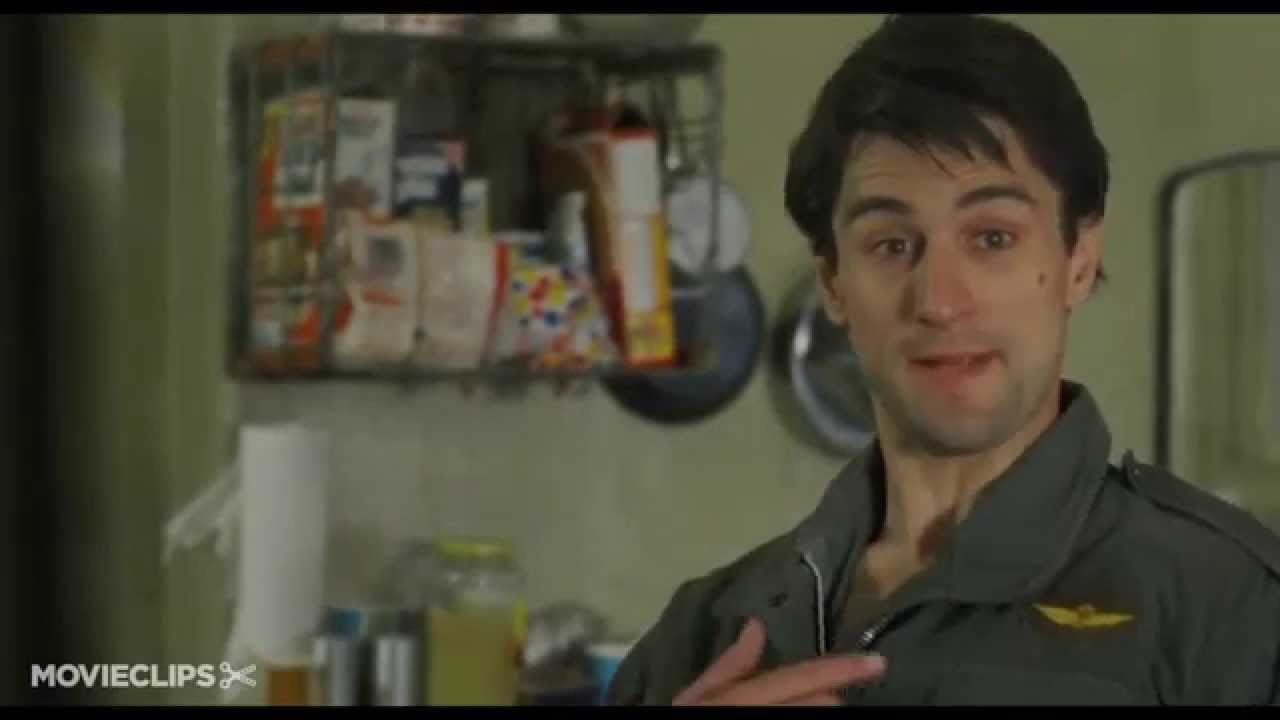
Is it that you are, in some manner, directing your conversation in my general direction?

But as part of the the process of developing the characters or story or for creating that spark in specific scenes within that story, it does have a place in movies especially. Still a very small part in the bigger picture (no pun intended). Although it depends upon the director. Some use lots of it, some use none.

Here is a well done video from the Now You See It channel that talks about the use of improv in movies. There’s also a chance to see a clip of the very attractive and articulate Dave Morris (you should watch his TEDx talk in full, even if you have already done so a hundred times). Key and Peele are also a good choice to feature because they both come from the improv world. Actors who developed their acting and knowledge of comedy scenes as improvisers but now work in the (mostly) scripted world.

Watch the video and feel free to share any feelings below.

Monday, 27 April 2015

Opening Other Doors

I recently attended the Amsterdam premiere of Another One Opens, a movie made in Vienna by The English Lovers, a widely-respected English-language improv group there.

It’s a fully improvised movie. Or, at least, as fully improvised as a movie can be, which is quite a lot in this case.

Improvising in movies isn’t new, but it’s usually very limited and rarely part of the greater process. There is a growing trend for allowing actors to improvise lines in comedies, but this was always the norm for Christopher Guest’s awesome mockumentaries. Certain directors of drama and social realism have used improvisation to discover the specifics of the characters and to generate naturalistic dialogue. In the case of comedies, it allows the actors to come up with funny lines organically, which can really work when you have a cast of great comedians.

Another One Opens began as a concept with a set of locations and seven actors and the story came about through things that happened during the preparation and process itself as well as during the scenes. It harks back to the days where a movie was made by pointing a camera at a park bench and a policeman, and having Charlie Chaplin come along and try to sit down.

Still from englishloversmovie.com.
The result is interesting. It is a great-looking movie, nicely acted and professionally made. Maybe because it has its roots in improvised long forms, the genre seemed to veer about a bit. It was basically a “coming of middle age drama” but with some comic interludes and an element of magical mystery. The characterisation was good, but didn’t feel deep enough, somehow. I think movie goers are used to getting more back story and psychological insight into the changes rather than in improv where, as long as a character commits to the change, we’ll buy almost any reason.

Clearly improvisation is only a major tool of the movie as not everything on screen can be improvised in the sense that it’s used in improv. Scenes often require multiple takes, for example. Also some scenes were, by necessity, shot out of sequence, which is really difficult when you don’t already know the story. It means a lot of scenes didn’t make the final cut, but then that’s true of movies shot with lots of planning. Plus many of the scenes with moments of character discovery did not make the final movie. This however, mirrors the work of directors such as Mike Leigh and John Cassavetes who use and used a lot of improvisation to find out about the characters.

The story, which is usually pretty darn fixed in a movie, was one area where the improvisation method was followed. The story not really being set until near the end of filming, but being worked bit by but out after the end of that day’s filming. Very much how in a long form, it’s only after a scene you can see where a story is heading and use this to decide what needs to happen next or at least who needs be the focus.

Still from englishloversmovie.com.
The talk after was very interesting and brought up one of the important things about improvisation: improvisation is a process. It is an alternative method of putting on a show (or in this case, making a film) to writing a script and rehearsing it. Now this has many implications: One is that the expectations from improv is that it won’t create as good a result as the other process. And in general, I would agree.

Much of the enjoyment people get from an improv show is because the audience is in on the fact the actors are making it up. The audience is much easier on them. Improv audiences are much more accepting than theatre audiences and certainly more than stand-up audiences. The same joke for example does way better if it happens during an improv show than if it is part of a stand-up routine or a scripted play. In fact, I would go a lot further and say that much of the laughter in an improv show comes from the process being visible to the audience. An actor being momentarily lost for words, a mistake being pointed out as a mistake rather than made part of the world, a gag that breaks the reality, that look many actors give to the audience to show them they are just mucking about and not taking any of this seriously… all of these contribute to much of the comedy in an improv show. It’s easy to think that this sort of thing are part and parcel of improv comedy rather than the crutches many improvisers find make sure it’s funny no matter what. It makes it harder to (a) use improv for anything other than comedy and (b) take the craft to the next level.

I do believe a cast of actors fully in tune, really working towards the goal of creating a great theatre piece (or whatever they intend to create) can create something as good as many scripted efforts. But I think that is the goal if you want to take the art further than it is. Until that is the focus of enough troupes, improv will always be treated like the lazy step-child of theatre and stand-up.

Still from englishloversmovie.com.
And although it seems the effort to create an improvised show is much less than to create a scripted one, it’s more that the efforts are placed differently. The build-up is not focused in a short period on a specific show but over a longer period on the process in general and on the building of the team. Plus an improviser capable of improvising a whole play-like structure needs to have had more stage-time than most actors need to be able to play a role effectively, because there’s a lot more going on, in my humble opinion. Not to take away from the craft of acting, which is a skill often lacking in improvisers and the reason believably is often not seen as a big requirement of improv shows.

This “improvisation as theatrical process” approach is definitely the one of The English Lovers as can be seen in their commitment to making a movie and the quality of the movie they made. A movie that more than proves the concept that a movie can be made this way if you have the belief and are willing to take the risk. Because, like everything improvised, there is a risk, and a movie is a much more expensive risk than most you are likely to take. And the more it is tried, the more chance that it might become a respected way to make low budget, reality-based movies.

More details of Another One Opens can be found on the website and IMDB.

Saturday, 11 January 2014

Man of 1000 Faces

I’ve been doing a spot of solo improv recently and getting my head around the fact that there’s something very different about improvising on your own as opposed to how it’s normally done, with an ensemble. Or at least one other player. Solo improv misses that one important factor that makes improv so exciting, that unpredictability due to you the input from other players. It’s a collaborative art form. How do you collaborate with just yourself?

Well, two main ways, as I see it.

One. By really listening to yourself and paying attention to what you’re doing. I think there are a lot of improvisers who say a lot of stuff but it’s just stuff to fill the space and don’t listen to what it is. I think because performers know what they are about to say, they don’t listen to it. But what we mean to say doesn’t always come out that. We pismronounce words; me get the emPHAsis wrong; we don’t portray the emotion we intended, dammit. In a multi-person scene, these things can be picked up by other players, but it’s good for you to be aware as well. But when on your own, you should definitely know what’s going on. The other reason to listen is because of another way you can collaborate and listen.

Two. If you are fully in your character and fully in the moment, you should be surprising yourself all the time. Clearly I mean surprising yourself with stuff the fits the characters, the story and the world you are creating, not because you are listing random things for no reason. This is the main thing about solo improv I find fascination: Being able to have a conversation with two (or more characters) that you have no idea where it’s going, even though it is you who are creating those characters.

Neither of these is only relevant to solo improv; both are core to any form of improv. I think my advice for improvisers (whether on their own or with others) that seems to come from this is as follows: Jump in with both feet, but allow yourself the time to observe what’s going on. Jumping in isn’t about rushing full speed ahead, it’s about making bold choices, inhabiting your characters and doing exactly what the character, the scene and the story requires. Usually the character, the scene and the story are alrealy telling you what they require; you just need to listen to them.

Thursday, 7 February 2013