Showing posts with label History. Show all posts

Thursday, 7 April 2011

Today it is Freytag

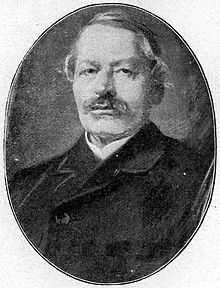
The following is from Freytag's Technique of the Drama, Gustav Freytag, (second English Edition, 1896; Original: Die Technik des Dramas, 1863), p19.

An action, in itself, is not dramatic. Passionate feeling, in itself, is not dramatic. Not the presentation of a passion for itself, but of a passion which leads to action is the business of dramatic art; not the presentation of an event for itself, but for its effect on a human soul is the dramatist's mission.


This is a 19th Century way of saying...
Drama is not simply the depiction of action, events and passion. It's depicting a passion that leads to action; and depicting events and their fundamental effect on people.

Or condensed further...
Passion causes action causes change.

Sunday, 4 April 2010

Agreement and the Comedy Store

When I first was learning improv in London, I went to the Comedy Store a few times. I would often be shocked at the amount of gagging and blocking that went on there. There was some great establishing and some awesome songs, but scenes would often be ended with gags that pretty much destroyed everything that came up until then. The audience loved it. Much of comedy is, after all, establishing a routine and then breaking it, so a block where you tear down everything that has been established is hugely funny. (Especially as in the back of the audience's mind is the fact that nothing you are creating is real because there are no props or scenery, it's all thin air.) So why are we taught not to block, when it can be the funniest thing that evening?

We're taught not to block, because without learning not to block, we never establish anything. And the funniest gags come after something of substance has been set up. Not to mention that after a few scenes of setting stuff up and then tearing it down, the audience gets the pattern and it doesn't have the same impact. They'll get bored of the gags. On top of this, whilst a well aimed gag-ending can be very funny, it will never be satisfying the way a nice tie-up with a funny line from one of the characters is.

Of course, once you get into telling a longer story, however, a gag will throw the audience out of your world and you may never get them back in. If you don't care about the story, they won't care. And to end a long-form story that you've spent an hour building up with scene-destroying gag will almost certainly make the audience feel cheated. They may well find it funny; and if your style is somewhat gaggy and comment-heavy, they may well accept it; but they'll never be satisfied.

If you follow the "improv as sex" simile, it's like pushing your partner's head under the covers and farting instead of achieving orgasm together.

Back at the Comedy Store, the sheer number of gags and blocks made my newbie improv zeal ruffle. If a zeal can ruffle. Why were they doing it like that? And why were they happy? Why were the two people who set up the scene joyously happy when Paul Merton took their scene and tore it apart with a single one-liner.

Well, partly because the one-liner was usually very clever and very funny, and also because there was an agreement between the players that this was their style. This was part what they did. They were a bunch of (mostly) guys having fun together. They weren't there to create high art and long cohesive stories, they were there to have fun and entertain an often-drunk crowd. It worked for them because there was an agreement (probably unspoken) that this was how things went down.

It draws the question: If a block is accepted by all the other players as an valid method of transaction in their scenes, is it no longer a "block" in improv terms? It also illustrated that agreement in improv goes far deeper than what people actually say.

And the young me, with my priggish improv-purist ways, I could choose whether or not I wanted to go see these guys do this popular show in their busy Central London venue. Or I could always go and sit with three other people and watch four actors above a ropey old pub in a dodgy part of town create a full-length improvised Greek tragedy based on a vegetable and three emotions. I could, and very often I did.

Obviously, I'm not heralding the block and the gag as great improv tools, but I was fascinated as to how they could be happily used in some shows without everybody feeling their ideas have been trampled all over. But before you cleverly shatter your next scene with a well-placed, but all-destructive scene-busting missile, remember your group almost certainly won't be so forgiving.

So, until next time, take care of yourselves, and each other.
Thursday, 17 December 2009

Genesis – The primordial ooze from which Peter Gabriel came

In which Peter discovers impro.

Sometime in the mid 1990s, when I was working as a programmer on some of the biggest, most-stupid, commercially-available computers of the time, a programme came on TV that opened my eyes to a form of funny called "Improvised Comedy."

At the time I had no ambitions to ever perform. In fact I was shy and awkward and the thought of appearing before "the public" terrified me. My ambition at the time was simply to write a best-selling novel, retire to a small cottage and have great difficulties with the follow up. I had known I was funny since school, where I developed my humour as a defence mechanism. But defensive was one thing. It's quite another to wilfully and openly go on the attack. Despite this, I did think, “that looks fun.”

Shortly after this, I saw an advert in Time Out advertising a “beginner’s course in Improvised Comedy” – showing you how to do it just like they do on Whose Line Is It Anyway? I had no idea such a course could be open to the general public and not a secret skill passed on only to selected actors.

The class was organised by a group called Roving Imps. The name meant nothing to me, but later on I would come to realise this was the first of many, many groups I would encounter with the word "imp" in the title. Later, I will devote a later section to why this should be avoided after your first three groups.

I signed up and waited for the weeks to roll by. The day before the class finally arrived and I was excited, but also daunted. Would I be any good? Would I be out of my depth? Surely I would be the only normal person there surrounded by a great ooze of actors all covering each other with ‘dahhhhhlings’ and making me look terrible because I did not want to act – I wanted to stand there and say funny things like my favourites on Whose Line...? In fact, I very nearly didn’t go. I was a gnat's eyelash away from writing off my fee and staying in the safe world I knew. In the end my flat-mate convinced me I should go, probably to stop me bothering her about it.

Far from being a bunch of luvvies, the people on the course were just like me. Some very much like me: they had IT jobs and were trying this out because it looked like fun. Others were actors, but not the horrible self-obsessed stereotypes that non-actors think actors are, but normal people trying to eek a living out of their creativity. Still more were stand-ups. I soon realised that stand-up comedians are not the super-slick joke-merchants they appear on TV, but are just like me, only more neurotic.

So there in a first-floor (upstairs) dance studio in London EC1, my impro virginity was lost and I fell in love. Since then, improv and I have grown older together. I have changed country, changed jobs, altered my wardrobe (slightly), but still Improv and I have this great thing going on. If only she’d stop seeing all these other people!